





Hidden Costs of Manual Work and Disconnected Systems
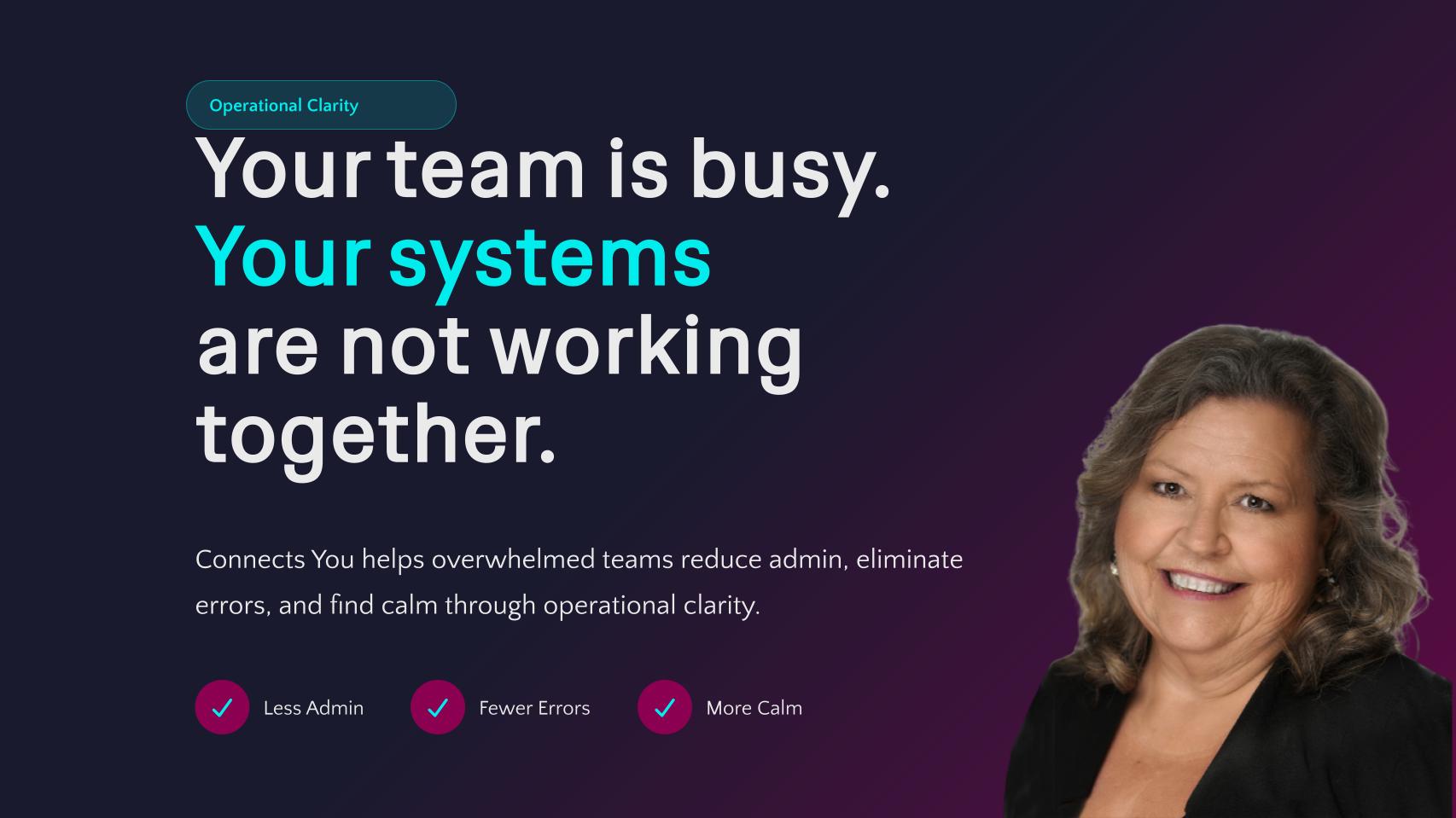
The Problem?
The hidden costs associated with manual work and fragmented systems. Key issues include:
- Time Lost in Re-entry: Teams waste 5-10 hours per week per person re-entering the same data across multiple systems. Tasks that should take seconds often consume minutes or hours due to repetitive processes.
- Human Errors: Manual processes lead to mistakes—incorrect data entry, typos in communications, and calculation errors—which result in 3-5 times the cost to fix compared to getting it right the first time.
- Missed Follow-Ups: Without a unified system, critical follow-ups fall through the cracks, leading to lost opportunities, weakened relationships, and revenue leakage. 23% of opportunities are lost due to poor follow-up.
- Tools That Don’t Communicate: Organizations use an average of 8-12 disconnected tools, creating silos that fragment visibility into business operations and customer interactions.
The Paradox: Why Adding More Tools Fails.
The Clarity OS’document challenges the common belief that adding more tools equates to better operations. Instead, it reveals a paradox:
- Tools Add Complexity: Each new tool introduces learning curves, logins, interfaces, and workflows, increasing complexity rather than simplifying processes. Teams end up managing tools instead of focusing on core work.
- Lack of Ownership: Without clear ownership, tools become abandoned or misused. No one maintains integrations or ensures proper usage, leading to systemic decay.
- Automation Without Clarity is Counterproductive: Automating broken processes only accelerates inefficiencies. Without understanding workflows and friction points, automation amplifies existing problems.
The Slide deck illustrates this paradox with “The Tool Trap”—a cycle where new software purchases lead to training requirements, adoption struggles, and ultimately, the same problems with added complexity.
The Solution: Clarity Before Automation.
The core teaching of the document is that clarity must precede automation. The solution involves three steps:
- Identify Friction Points: Map current workflows to pinpoint where time is lost, errors occur, and frustration builds. This step is critical because you cannot fix what you haven’t clearly identified.
- Decide What to Automate: Not all tasks should be automated. Strategic decisions must be made about which repetitive tasks to automate and which require human judgment.
- Connect Existing Tools: Instead of acquiring new tools, focus on making current systems communicate. Build integrations that allow data to flow seamlessly and automatically between platforms.
The mantra is: “Clarity before automation. Structure before tools.”
The Connects You Methodology.
OPur todya’s presentation outlines a structured approach to achieving operational clarity:
- Audit: Conduct a deep dive into current operations. Map workflows, identify friction points, and document where time and money are being wasted.
- Workflow mapping
- Pain point analysis
- Tool assessment
- Roadmap: Develop a prioritized implementation plan. Clarify what to fix first, what to automate, and how to connect existing tools.
- Priority sequencing
- Automation strategy
- Integration blueprint
- Execution: Implement the plan with hands-on support. Build integrations, set up automations, and train teams on streamlined workflows.
- Build integrations
- Deploy automation
- Team training
Expected Outcomes…
We have highlighted the transformative results organizations can achieve within 30-60 days of adopting this methodology:
- Less Admin: Repetitive tasks and manual data entry are eliminated through smart automation, freeing up hours each week for high-value work. Organizations experience a 70% reduction in manual admin tasks.
- Faster Execution: Workflows that previously took hours are completed in minutes. Information flows automatically between systems, eliminating bottlenecks and delays, resulting in 3 times faster process completion.
- Clear Ownership: Every system, process, and automation has a designated owner, ensuring accountability and eliminating confusion about responsibilities.
Before vs. After Comparison
here is a visual comparison of the operational state before and after implementing the methodology:
| BEFORE | AFTER |
|---|---|
| 5-10 hrs/week on data entry | <1 hr/week, automated |
| Missed follow-ups common | Automated reminders |
| 8-12 disconnected tools | Connected ecosystem |
| No system ownership | Clear accountability |
Operational Clarity Audit
here is what we suggest: an Operational Clarity Audit—designed to help organizations quickly identify their biggest operational challenges and create a clear roadmap for improvement.
- Duration: 2-3 weeks
- Involvement: 3-5 hours of the client’s time
- Deliverable: Detailed audit report
- Output: Prioritized roadmap
What’s Included:
- Workflow analysis
- Friction point mapping
- Integration blueprint
- Tool assessment
- Automation opportunities
- Implementation roadmap
Benefits:
- Low Risk: Start with clarity before committing to full implementation.
- Fast Results: Gain actionable insights in weeks, not months.
- Clear Path: Walk away with a prioritized roadmap, knowing exactly what to do next.
Book a Clarity Session
Here is an invitation to book a free 30-minute Clarity Session. This session is designed to discuss current challenges and explore how the methodology can help teams achieve operational relief.
- 30 Minutes: No obligation, focused discussion.
- Focused Discussion: Address specific challenges.
- Clear Next Steps: Actionable insights and recommendations.
Takeaway
The “Connects You — Operational Clarity” document teaches that operational inefficiencies stem from disconnected systems, manual processes, and the misguided belief that more tools equal better operations. The solution lies in achieving clarity before automation, connecting existing tools, and implementing a structured methodology to eliminate friction, reduce errors, and restore focus on high-value work. The expected outcomes include less admin, faster execution, and clear ownership, all achievable within 30-60 days through a systematic audit, roadmap, and execution process. The document encourages organizations to start with an Operational Clarity Audit to identify challenges and create a prioritized plan for improvement.